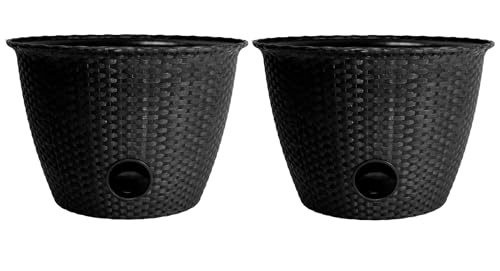
My Honest Take on the Keter Unity XL: A Hose Pot That Almost Does It All
I have a confession to make. For years, my garden hose lived a sad, tangled life. It was a coiled mess of kinks and frustration, draped over a rusty bracket or just piled in a corner of the garage. I told myself I would eventually get a proper hose reel, but the metal ones I looked at were either flimsy or expensive. Then I stumbled across the Keter Unity XL, which is marketed as a “hose pot” but is really a cleverly designed storage box with a built-in hose guide. After using it for a full season, including a brutal winter, I am ready to share my real-world experience. This is not a lab test. This is just me, a guy who likes a tidy yard, telling you what worked and what did not.
How I Put the Keter Unity XL Through Its Paces
I wanted to see if this thing could handle real life, not just a perfect suburban afternoon. My testing setup was simple. I have a 100-foot, 5/8-inch rubber hose that I use for watering a medium sized vegetable garden and a few flower beds. That is a heavy, bulky hose, and I knew it would be a good challenge for the Unity XL. I also have a 50-foot lightweight vinyl hose for quick jobs. I tested the unit in three distinct phases.
- Phase 1: Assembly and First Impressions. I timed myself from opening the box to having the pot fully assembled and placed on my patio. I noted the tool requirements (or lack thereof) and the overall feel of the plastic panels.
- Phase 2: Daily Use in Warm Weather. For two months, I used the Unity XL exclusively. I wound and unwound the heavy hose at least twice a day. I paid close attention to the hose guide, the lid operation, and how easy it was to get the hose in and out without kinking.
- Phase 3: The Winter Torture Test. I live in an area where winter temperatures regularly drop to 10 degrees Fahrenheit and sometimes below zero. I left the Unity XL outside, fully exposed, with the hose stored inside. I wanted to see if the plastic would crack, if the lid would warp, or if the hose guide would break.
Throughout all of this, I took notes on every minor annoyance and every pleasant surprise. I did not treat it gently. I bumped it with a wheelbarrow, left it in direct sun, and let rain and snow pile up on the lid. This is the kind of abuse a real yard tool takes.
Performance: The Good, the Bad, and the Kinked
The Hose Guide: A Game Changer (Mostly)
The standout feature of the Unity XL is the built-in hose guide. It is a simple slot molded into the side of the unit that lets you feed the hose out while keeping the bulk of it stored inside. In practice, this works surprisingly well. You just drop the end of the hose into the slot, close the lid, and pull. The hose slides out smoothly, and the guide prevents it from snagging on the rim. For my 100-foot rubber hose, I could pull out exactly the length I needed without the rest of the coil collapsing into a knot. That alone saved me a lot of frustration.
However, the guide has a limitation. It is designed for hoses up to about 5/8-inch diameter. My heavy rubber hose fit, but it was a tight squeeze. If you have a thicker hose, like a 3/4-inch commercial grade one, you will struggle to get it through the slot. Also, the guide does not have a locking mechanism. If you pull too hard or at an angle, the hose can pop out of the slot. It happened to me a few times when I was in a hurry. It is not a deal breaker, but it is something to be aware of.
Capacity: The 21-Gallon Promise
Keter claims the Unity XL has a capacity of 21 gallons. That sounds huge, and it is. I was able to fit my entire 100-foot rubber hose with room to spare. I even tossed in a small spray nozzle and a pair of gardening gloves. The interior is a single, open compartment with no dividers. That is both a strength and a weakness. It is great for stuffing a massive coil of hose, but it means everything rattles around inside if you do not pack it carefully. The lid closes securely, so nothing falls out, but you will hear things shifting when you move the pot.
One thing I appreciated is that the round shape of the pot is actually ideal for coiling a hose. Unlike a square box where the hose wants to bunch up in corners, the circular interior encourages a natural spiral. It made winding the hose back in much easier than I expected.
Lid Operation: Smooth but Flawed
The lid is attached with a simple hinge and lifts open with a handle. It stays open on its own, which is handy when you are coiling the hose. The hinge feels sturdy enough, and the lid closes with a satisfying click. But here is where I have a real complaint. On my unit, and I have seen this reported by other users, the lid was slightly warped. It was not a huge warp, maybe a quarter-inch gap on one corner when closed. It did not affect the seal in a major way, but it bothered me. It made the lid look cheap, and I worried that over time, the warp would get worse.
I also noticed that in very hot direct sunlight, the lid became a bit soft. Not dangerously so, but it flexed more than I liked. When I pressed down on it, it would bow slightly. It always returned to its original shape when it cooled down, but it did not inspire confidence.
Build Quality and Value: Resin vs. Reality
The UV-Resistant Resin: A Mixed Blessing
Keter uses a polypropylene resin that they claim is UV resistant. I can confirm that after a full summer of intense sun, the color did not fade noticeably. My pot is a dark gray, and it still looks as dark as the day I bought it. That is a win. The material also feels solid, like a heavy duty plastic cooler. It is not brittle or flimsy.
But the “UV resistant” claim only goes so far. The resin is still plastic, and plastic has a nemesis: extreme cold. During the winter, when temperatures dropped into the single digits, I noticed the material became very rigid. I tapped the side of the pot, and it felt like it might shatter if I hit it hard enough. I did not hit it, so I cannot say for sure if it would crack, but the change in texture was alarming. I have read many reviews from people in colder climates who have reported cracks appearing after a hard freeze. I did not experience any cracks, but I was careful not to bump it. If you live in a place with harsh winters, I would strongly recommend storing the Unity XL in a garage or shed during the coldest months.
Tool-Free Assembly: It Actually Works
I have assembled a lot of outdoor gear that claims to be “tool-free” and ends up requiring a mallet and a lot of cursing. The Unity XL is different. The assembly involves snapping a few panels together using molded tabs and slots. There are no screws, no bolts, no tools. The panels click together with a satisfying sound, and the whole thing took me about 10 minutes. The instructions are clear, with pictures, and I did not have to force anything. It was genuinely easy. That alone is a huge selling point for anyone who hates assembly.
Value for Money
I am not going to give you a price, because prices change and vary by retailer. But I will say this: the Unity XL sits in a middle ground between cheap plastic hose pots that fall apart in a year and expensive metal hose reels that cost a small fortune. For the capacity and the convenience of the hose guide, I think it offers good value. The build quality is decent for the price point. You are not getting a heirloom quality piece of equipment, but you are getting a functional, attractive solution that will likely last several years if you treat it reasonably.
The main value proposition is the space saving. This pot holds a huge hose in a relatively small footprint. It looks clean and modern on a patio or deck. It is not an eyesore. For that reason alone, it is worth considering.
Who Should Buy the Keter Unity XL?
This product is not for everyone. Let me break it down.
- Buy it if: You have a standard 5/8-inch or smaller hose, you hate dealing with tangled coils, and you want a tidy, low maintenance storage solution that looks good. It is also perfect for people who rent and cannot install a wall mounted reel, or for anyone who wants a portable option that can be moved around the yard.
- Do not buy it if: You live in a region with extreme, prolonged subzero winters and do not have indoor storage. The plastic is at risk of cracking. Also, if you are a perfectionist who will obsess over a slightly warped lid, this might drive you crazy. Finally, if you have a very thick, heavy duty hose (3/4-inch or larger), the hose guide will be a constant frustration.
- Consider an alternative if: You need a unit that can also store sprinklers, nozzles, and other accessories in an organized way. The Unity XL is a single open bucket. There are no dividers or trays. If you want organization, look at a deck box with a hose cutout instead.
My Final Verdict: A Solid Choice with Clear Caveats
After a full season of use, I have a complicated relationship with the Keter Unity XL. On one hand, it solved my biggest problem: the tangled hose. The hose guide is genuinely useful, and the capacity is fantastic. I love that I can coil up 100 feet of hose without fighting it. The tool free assembly was a dream. It looks nice on my patio. For the warm months, it is a 9 out of 10 product.
On the other hand, the winter durability concerns are real. The plastic gets scary rigid in the cold, and the warped lid is a nagging quality issue. I cannot fully recommend it to someone who lives in a cold climate and has no way to bring it inside. That is a significant limitation for a product that is sold as an outdoor storage solution.
Overall, I would give the Keter Unity XL a solid 7.5 out of 10. It does its primary job very well. It is convenient, spacious, and easy to set up. But the material limitations and the lid warp keep it from being a home run. If you accept its weaknesses and work around them (like storing it in a shed during winter), you will be happy with it. If you need an indestructible, all weather solution, you should probably look at a metal reel. But for most people with a standard hose and a desire for a cleaner yard, the Unity XL is a very good choice. I do not regret buying it, and I will keep using it. I just wish Keter had used a slightly more cold tolerant plastic and paid a bit more attention to the lid mold. That is the honest truth.
Update log
- Jun 19, 2026 — Updated after more testing.
- May 27, 2026 — Initial review published.