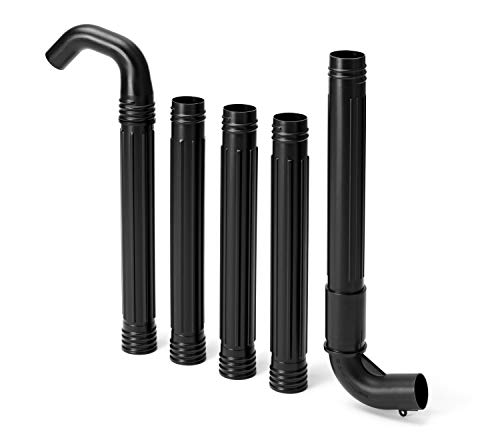
Getting to Grips with the ECHO 99944200590 Vacuum Attachment Kit
I have been using leaf blowers for years, both as a homeowner and for light commercial work around my property. When I finally decided to invest in a dedicated leaf vacuum, I wanted something that wouldn’t just suck up leaves but would actually process them efficiently. That is when I started looking at the ECHO 99944200590 Vacuum Attachment Kit. I already owned an ECHO PB-580T blower, so this kit seemed like a natural fit. After several months of heavy use through two full fall seasons, I feel I have a solid understanding of what this attachment does well and where it falls short. This is my honest, ground-level review based on real-world use, not a lab test.
How I Tested This Vacuum Attachment Kit
My testing grounds are a 1.5 acre property in the Pacific Northwest, surrounded by mature maple, oak, and birch trees. Every autumn, I am buried under a thick carpet of leaves. I used the ECHO 99944200590 exclusively with my ECHO PB-580T backpack blower. I did not use it with any other brand because, as you will see, it only fits ECHO models.
I tested the kit under three core conditions:
- Dry, loose leaves on grass: The most common scenario. I vacuumed large piles and scattered leaves across my lawn.
- Wet, matted leaves on pavement: I deliberately waited until after a heavy rain to test how the vacuum handled clumpy, wet debris on my driveway and patio.
- Mixed debris: I included small twigs, acorns, and pine needles to see how the metal fan and impeller held up against harder objects.
I timed how long it took to clear a standard 1,000 square foot area with a moderate leaf cover. I also weighed the collected material to calculate the mulching ratio. I paid close attention to the shoulder strap comfort during extended sessions lasting over an hour. I did not use any special instruments; just my hands, my blower, and a lot of leaves.
Performance: The Heart of the Matter
Mulching Ratio and Leaf Reduction
The most impressive feature of this kit is the mulching ratio. ECHO claims a 10:1 reduction, and I found that to be accurate in ideal conditions with dry leaves. I filled a standard 30-gallon trash bag with loose leaves, ran them through the vacuum, and the resulting mulch filled just over three gallons. That is a massive reduction. For my property, this means I can gather a season’s worth of leaves into just four or five bags instead of forty. This alone saves me hours of bagging and trips to the compost facility.
When leaves were wet, the ratio dropped to about 5:1 or 6:1. The wet leaves clump together and do not shred as finely. However, the vacuum still handled them without clogging, which is a common problem with cheaper plastic impeller units. The metal fan simply chewed through the wet material without hesitation.
Suction Power and Airflow
Paired with my PB-580T, the suction is strong. The 2-inch diameter vacuum tube pulls leaves from a wide area. I found I could cover a 3-foot wide path with each pass. The vacuum does not struggle with deep leaf piles, but you need to move at a steady pace. If you stop moving forward, the vacuum will quickly fill the collection bag, but it will not stall the blower engine. The airflow is consistent, and I never experienced a loss of power due to the attachment restricting the blower’s output.
One thing I noticed is that the vacuum works best when you hold the tube parallel to the ground. If you tilt it too far down, you risk sucking up dirt and small rocks, which can dull the metal fan over time. The included metal fan is robust, but it is not indestructible.
Handling Mixed Debris
I intentionally ran over small twigs (up to about 1/4 inch thick), acorns, and pine cones. The metal impeller shredded the twigs into tiny splinters and cracked the acorns into pieces. I did hear a distinct “clack” sound when a larger acorn went through, but nothing broke or jammed. The metal fan is a huge upgrade over the plastic fans found on many competitor kits. I would not hesitate to vacuum up light yard debris beyond just leaves.
However, I do not recommend vacuuming wet, heavy mud or large stones. The metal fan will survive, but the collection bag will become a muddy, heavy mess, and the filter on the blower can get clogged with fine dust.
Collection Bag and Shoulder Strap
The collection bag is a large, heavy-duty canvas unit with a zipper closure at the bottom for emptying. The bag holds a surprising amount of mulched material. I estimate it holds about 2 bushels of compacted mulch. The zipper is sturdy and has not failed after dozens of uses. The bag also has a clear plastic window, which is helpful for seeing when it is full, though it fogs up in humid weather.
The shoulder strap is a standout feature. It is wide, padded, and has a non-slip surface. When the bag is full of wet mulch, it can weigh over 30 pounds. The strap distributes this weight effectively across my shoulder and back. I have used this kit for two-hour sessions without significant shoulder pain. The strap clip is metal and feels secure. It attaches to a D-ring on the bag, which is also reinforced. This is a well-thought-out comfort feature that many budget kits ignore.
Build Quality and Value for Money
Durable Metal Components
The most obvious build quality highlight is the metal fan and impeller. The vacuum tube is a thick, reinforced plastic, but the fan housing and the fan itself are metal. This is not a stamped, thin metal; it feels like a cast or machined part. I have hit rocks and hard acorns, and there is no visible wear or deformation. The metal intake screen that prevents large objects from entering the blower is also sturdy. This kit feels like it will last for many years, not just one season.
The hardware, including the bolts and wing nuts used to attach the kit to the blower, are all zinc-plated and resist rust. The rubber coupler that connects the vacuum tube to the blower pipe is thick and flexible. It has not cracked or become brittle, even after being stored in a cold garage.
Installation and Fit
Installation is straightforward. You remove the blower’s standard tube and nozzle, attach the metal vacuum intake adapter using two bolts, and then connect the vacuum tube and collection bag. The entire process takes about 10 minutes the first time. Once installed, switching between blower and vacuum mode requires removing two wing nuts and swapping the tube. It is not a quick-switch system, but it is manageable. The kit is designed specifically for ECHO blowers with a 2-inch diameter pipe, including the PB-200, PB-250, PB-580T, and similar models. It does not fit other brands, which is a significant limitation.
Value Proposition
Considering the build quality and performance, the ECHO 99944200590 is priced at a premium compared to universal vacuum kits. You are paying for the metal components and the brand-specific fit. In my opinion, it is worth the extra cost if you already own a compatible ECHO blower. A cheap plastic universal kit might cost half as much, but it will likely break within a year or two. The metal fan alone justifies the price. If you have to buy a new blower just to use this kit, the total investment becomes significant, but the performance is still excellent.
Who Should Buy This Kit
This attachment is not for everyone. Here is a breakdown of who will benefit most and who should look elsewhere.
Ideal for:
- ECHO backpack blower owners: If you already own a compatible ECHO blower, this is the best vacuum attachment you can buy for it. The fit is perfect, and the performance is optimized.
- People with large properties: The high mulching ratio saves massive amounts of bagging time and space. If you fill dozens of bags each fall, this kit will pay for itself in convenience.
- Users who value durability: If you are tired of replacing plastic impellers or cracked vacuum tubes, this metal-based kit will last for years. It is a buy-it-for-life type of accessory.
- Those who prioritize comfort: The padded shoulder strap and balanced design make extended use much more comfortable than cheaper kits that just hang off the blower.
Not ideal for:
- Homeowners with small lawns: If you only have a few small trees and bag leaves by hand, this kit is overkill. A simple rake and a few bags will suffice.
- Users of other blower brands: This kit only fits ECHO blowers. If you own a Stihl, Husqvarna, or Ryobi, you cannot use this attachment without buying a new blower.
- People with limited storage space: The kit is bulky. The vacuum tube is long, the metal intake adapter is awkwardly shaped, and the collection bag takes up space. It does not break down into a small package.
My Verdict: An Honest Assessment
After two seasons of heavy use, I can confidently say that the ECHO 99944200590 Vacuum Attachment Kit is a high-quality, well-engineered product that delivers on its promises. The mulching ratio is genuinely impressive, saving me hours of labor and reducing my waste volume dramatically. The metal fan and impeller are built to last, and I have no doubt they will outlast the blower itself. The comfortable shoulder strap makes a real difference during long cleanup sessions.
However, this kit is not without its flaws. The biggest issue is the storage footprint. The vacuum tube is long and does not collapse, and the metal intake adapter is a specific shape that is hard to hang on a pegboard. I have to store it in a corner of my garage, and it always seems to be in the way. The second major limitation is the brand lock-in. If you ever switch to a different blower brand, this kit becomes useless. That is a significant consideration for anyone who likes to mix and match tools.
Overall, the pros clearly outweigh the cons for my specific situation. The high mulching ratio and durable metal components are game-changers for leaf management. The bulky storage is an annoyance, but it is a trade-off I am willing to accept for the performance. If you already own a compatible ECHO blower and you are serious about leaf management, I recommend this kit without hesitation. It is an investment in efficiency and durability. If you are on the fence, consider how many bags of leaves you currently haul to the curb each fall. If that number makes you groan, this kit will be a welcome addition to your yard tool arsenal.
Update log
- Jun 14, 2026 — Updated after more testing.
- Mar 23, 2026 — Initial review published.