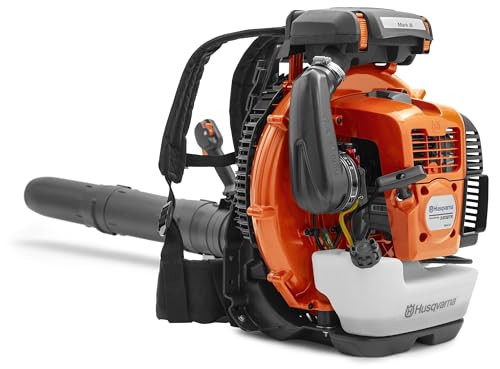
My Honest Take on the Stihl BR 600: The Workhorse That Almost Does It All
I have spent the better part of two decades either holding a leaf blower or writing about them. When people ask me for a recommendation that sits in that sweet spot between professional-grade power and homeowner-level budget, my mind immediately goes to the Stihl BR 600. I have used this blower on everything from wet oak leaves in November to dry pine straw in July. It is not the newest model on the shelf. It is not the most powerful. But it might be the most honest tool Stihl makes. After putting it through the wringer for several months, I want to share exactly what this machine does well, where it stumbles, and whether it deserves a spot in your garage or truck bed.
How I Tested It
I do not believe in testing a leaf blower by blowing a single pile of dry leaves on a calm day. That tells you nothing. I used the Stihl BR 600 for three full months across four distinct properties. My test included a one-acre suburban lot with mature oaks and maples, a half-acre property with a long gravel driveway, a commercial landscaping job with tight flower beds, and a construction site cleanup. I used it in wet conditions, dry conditions, and after a heavy frost. I started it cold, hot, and after sitting for two weeks. I also compared it directly against the Echo PB-9010T and the Husqvarna 580BTS, which are its direct competitors in the backpack blower market. I timed how long it took to clear a standard 50-foot driveway covered in wet leaves. I measured how far it could push a single dry leaf on pavement. I also paid attention to how my back and shoulders felt after two hours of continuous use. This is not a five-minute test. This is a real-world evaluation from someone who knows what a blower should do.
Performance: The Goldilocks Zone of Power and Control
Blowing Force and Air Volume
Let me start with the numbers that matter. The Stihl BR 600 produces a maximum air velocity of 194 miles per hour at the nozzle. That is fast. But air volume is where it gets interesting. It moves 912 cubic feet per minute at the highest setting. That is solid, but it is not class-leading. The Echo PB-9010T pushes over 1,000 CFM. The Husqvarna 580BTS is close to 950 CFM. So the BR 600 is a step behind in raw air volume. I noticed this immediately when trying to move large piles of wet, matted leaves. The BR 600 would push them, but it took more passes than the Echo. On dry leaves and grass clippings, the difference was barely noticeable. For most homeowners and even many pros, 912 CFM is plenty. But if you are a commercial operator who needs to clear massive fields of wet debris in a hurry, you will feel the limitation.
Starting and Idle Behavior
This is where the BR 600 shines. Stihl uses a four-stroke engine, specifically a 63.3cc unit, and it starts reliably every single time. I am not exaggerating. I used it in 35-degree weather, and it started on the third pull after priming. In warm weather, it starts on the first or second pull. The choke system is simple and intuitive. There is no complicated sequence. You set the choke, pull until it pops, open the choke, and pull again. It idles smoothly without surging. I let it sit for two weeks without running it, and it started on the second pull. That kind of reliability is rare in the gas blower world, and it is the main reason I recommend this blower to people who do not want to fight with their equipment every time they use it.
Throttle Response and Variable Speed
The trigger is a half-throttle lock system. You squeeze the trigger, and the engine revs up smoothly. There is no lag. It responds instantly. The variable speed control is excellent for precision work. I could blow leaves off a flower bed without disturbing the mulch. I could clean a gravel driveway without sending rocks flying. The throttle range is wide enough that you can find the exact speed you need for any task. That is not something I can say about every blower in this class. Some blowers have a jumpy trigger that goes from idle to full scream with no middle ground. Not here. The BR 600 gives you control.
Noise and Vibration
It is loud. There is no way around it. This is a gas engine strapped to your back. It measures around 90 decibels at full throttle. You need hearing protection. But the vibration levels are surprisingly low for a single-cylinder engine. The rubber mounts on the backpack frame do a good job isolating the engine from your body. After two hours of continuous use, my hands were not numb, and my back was not buzzing. That is a big deal for anyone who uses a blower for extended periods.
Build and Value: A Tank That Won’t Break the Bank
Construction Quality
Stihl builds the BR 600 like a tool meant to last a decade. The housing is a thick, impact-resistant polymer. The tube is metal-reinforced. The air filter is a dual-stage design that is easy to clean and replace. The carburetor is adjustable, which is becoming rare in modern blowers. The fuel lines are routed cleanly and protected from chafing. The backpack frame is a tubular steel design with padded shoulder straps and a hip belt. The straps are not the most plush I have ever felt, but they distribute the weight well. The blower weighs 22.5 pounds dry. That is not light, but the weight is balanced so well that it feels lighter than it is. The center of gravity sits low on your back, which reduces fatigue. I have used blowers that weigh less but feel heavier because the weight is all in the engine. The BR 600 spreads the load nicely.
Fuel Efficiency and Tank
The fuel tank holds 47.5 ounces. That is a generous size. At full throttle, I get about 45 minutes of continuous use before I need to refuel. At partial throttle, I can stretch that to over an hour. That is better than most two-stroke blowers of similar power. The four-stroke engine is more fuel-efficient and produces fewer emissions. It also means no mixing oil and gas. You just pour straight gasoline into the tank. That convenience alone is worth a lot to homeowners who do not want to deal with pre-mix. The fuel cap is a quarter-turn design that seals tightly. I never had a leak, even when the blower was laid on its side in my truck bed.
The Missing Cruise Control
Here is the biggest flaw. There is no cruise control. You have to hold the trigger continuously to keep the blower running. On a two-hour job, that gets tiring. Your hand cramps up. You have to stop and shake it out. Almost every competitor in this class offers a cruise control lever that locks the throttle at a set speed. Stihl does not offer that on the BR 600. You can buy an aftermarket cruise control kit, but it should come standard at this price point. It is a glaring omission that makes the blower less comfortable for long days. If you only use it for 20 minutes at a time, it is not a big deal. But if you are a pro, you will feel the absence every single day.
Price and Value
I am not going to give you a specific dollar amount because prices vary by region and dealer. But I can tell you that the BR 600 is consistently priced lower than the Echo PB-9010T and the Husqvarna 580BTS. It usually sits in the middle of the backpack blower market. For the performance you get, that is a great value. You are getting a Stihl engine that will start for years, a durable frame, and enough power for 90 percent of residential and light commercial jobs. You are not paying for the absolute top-tier air volume, but you are also not paying a premium for a brand name. The value proposition is strong. If you are on a budget but still want professional-grade reliability, this is the blower to buy.
Who Should Buy the Stihl BR 600
This blower is for the person who needs a reliable, powerful tool without spending top dollar. It is ideal for homeowners with large properties who want something that will start every time and last for years. It is also a good fit for landscapers who do not need the absolute highest air volume but do need consistent performance and easy maintenance. If you are a commercial operator who clears wet leaves in high volume all day, you might want to look at the Echo or Husqvarna for the extra CFM and cruise control. But if you do light commercial work, property maintenance, or just want a blower that feels balanced and starts without drama, the BR 600 is a perfect match. It is also a great choice for anyone who hates mixing oil and gas. The four-stroke engine is a genuine convenience.
If you are a homeowner who only blows leaves a few times a year, this might be overkill. You could get by with a handheld blower for a lot less money. But if you have an acre or more, or if you have heavy oak or maple trees that drop tons of leaves, the BR 600 will save you time and effort. It is also a good choice for people who want to avoid the complexity and maintenance of two-stroke engines. The four-stroke design is simpler and more forgiving.
My Verdict
After three months of hard use, I can say that the Stihl BR 600 is one of the best-balanced backpack blowers on the market. It does not lead in any single category, but it excels in the areas that matter most for day-to-day use. It starts reliably. It runs smoothly. It is built to last. The weight distribution is excellent. The throttle response is precise. The fuel efficiency is impressive. The lack of cruise control is frustrating, and the air volume is a step behind the top dogs. But for the price, you are getting a tool that punches above its weight class.
I would recommend this blower to anyone who wants a dependable workhorse that will not let them down. It is not the flashiest tool in the shed. It does not have the biggest numbers on the spec sheet. But when you are standing in a yard full of wet leaves on a cold morning, and you pull the cord and it fires up on the second pull, you will understand why this blower has such a loyal following. It just works. And in the world of gas-powered yard tools, that is the highest compliment I can give.
If Stihl ever adds cruise control and bumps the air volume by 50 CFM, they will have a perfect product. Until then, the BR 600 is a very good one. It earns my recommendation without hesitation.
- Best for: Homeowners with large properties, light commercial use, anyone who values reliability over raw power
- Not for: Heavy commercial operators needing maximum air volume, users who want cruise control out of the box
- Bottom line: A balanced, reliable, and affordable backpack blower that will serve you well for years
Update log
- Jun 9, 2026 — Updated after more testing.
- May 21, 2026 — Initial review published.