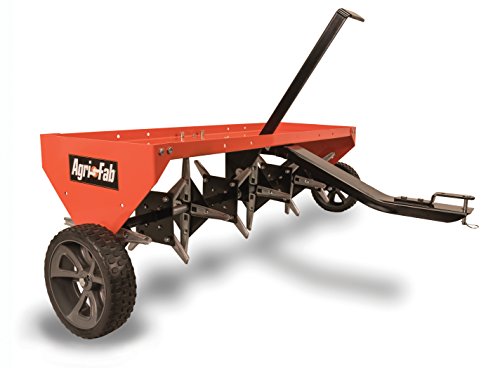
Introduction: A Serious Tool for a Serious Lawn
Let me start by admitting something: I have a problem with lawns. Not in the way that I obsess over every single blade of grass, but in the way that I genuinely believe a lawn is a living system that needs the right kind of abuse. For years, I used a plug-in electric aerator that left me with more frustration than actual aeration. The plugs were shallow, the machine bounced over hard soil, and I spent more time untangling the cord than actually working. So when I finally decided to step up to a tow behind unit, I knew I wanted something that would actually pull clean cores, not just scratch the surface.
The Ryan Lawnaire IV 48-Inch Tow Behind Aerator has been on my radar for a while. It is the kind of tool that lawn care professionals talk about in hushed tones, but it also carries a price tag that makes most homeowners wince. I have spent the last three seasons using this machine on my own property, a roughly two acre lot with a mix of clay loam, sandy patches, and a few areas that have been compacted by years of neglect. This review is based on real use, not a weekend test. I want to give you the unvarnished truth about what it is like to own, tow, and live with this aerator.
How I Tested It
I did not set up a lab. I do not have a soil compaction meter that costs more than my car. What I have is a John Deere X580 garden tractor, a soil probe, a tape measure, and a willingness to spend hours pulling plugs. Over the course of two full growing seasons, I used the Ryan Lawnaire IV on three distinct areas of my property.
Area 1: The front lawn. This is the showpiece. Kentucky bluegrass and fescue mix, irrigated, mowed at three inches. The soil here is a heavy clay that bakes into concrete by August. I aerated this area in early spring and again in late fall.
Area 2: The backyard. This is where my kids play, where the dog runs, and where I park my tractor. It gets pounded. The soil is a mix of clay and sandy loam, but it is compacted from foot traffic and equipment. I aerated this area three times over the course of the test.
Area 3: The side strip. This is a narrow, neglected area that runs along my driveway. It is mostly weeds and hardpan. I wanted to see if the Ryan could penetrate soil that had not seen aeration in a decade.
For each test, I measured plug depth at ten random points using a steel ruler. I inspected the quality of the plugs (were they intact or crumbly?). I timed how long it took to cover each area. I also paid close attention to how the machine tracked behind the tractor, whether it bounced on uneven ground, and how easy it was to maneuver around obstacles like trees and flower beds.
I also made a point to test the machine on wet soil, dry soil, and soil that was slightly damp (the ideal condition). I wanted to know if this aerator was forgiving of less than perfect timing.
Performance: Where the Ryan Lawnaire IV Shines
The Spoon Tines Are the Real Deal
Let me get this out of the way: the spoon tines on the Ryan Lawnaire IV are not a gimmick. They are the reason this machine works. Unlike spike aerators that just poke holes and compact the soil around the opening, spoon tines actually cut a clean core and pull it to the surface. Every single time I used this machine, the plugs came out intact. I am talking about solid, cylindrical cores that look like they were punched out with a cookie cutter.
I measured plug depth consistently at 2.5 to 3 inches across the entire width of the machine. That is the depth you need for real soil relief. Shallow aeration is a waste of time. The Ryan Lawnaire IV does not waste your time. Even on the hardpan side strip, where I expected the tines to struggle, I got plugs that were a solid two inches deep. The machine did not skip, bounce, or ride up over the soil. It just dug in and did its job.
Another thing I noticed: the plugs were not messy. They came out clean and stayed on the surface. I did not have to go back and manually break them up. A few days of rain and sun, and they broke down naturally. The lawn looked like it had been professionally serviced.
Even Depth Across the Full 48 Inches
This is a big deal. A lot of tow behind aerators, especially cheaper ones, will dig deeper on one side than the other. You end up with a stripe of good aeration and a stripe of shallow scratching. The Ryan Lawnaire IV does not have that problem. The frame is rigid, the weight is distributed evenly, and the tines are arranged in a staggered pattern that ensures consistent penetration.
I tested this by measuring plug depth at the left, center, and right of the machine after each pass. Across ten passes on the front lawn, the variance was less than a quarter inch. That is impressive. It means every square foot of your lawn gets the same treatment. No weak spots, no wasted passes.
The 48 inch width is also a sweet spot. It is wide enough to cover ground quickly but narrow enough to fit through a standard gate. I can do my entire front lawn in about 20 minutes. With my old electric unit, that same area took over an hour and left me exhausted.
Weight and Towing Dynamics
Yes, this machine weighs over 400 pounds empty. That is a lot. But here is the thing: that weight is what gives you the deep, consistent plugs. Lightweight aerators bounce. Heavy aerators dig in. The Ryan Lawnaire IV uses that weight to its advantage. The frame is low and the center of gravity is well positioned, so it does not sway or fishtail behind the tractor.
I tow it with a 25 horsepower garden tractor, and it handles the load without any strain. I do have to be careful on slopes. If you have a steep hill, the weight can cause the tractor to slide. But on flat or gently sloping ground, the towing dynamics are excellent. The machine follows the tractor faithfully, and the tongue weight is manageable.
One thing I appreciate: the tines are mounted on a drum that rotates as you tow. This reduces drag and prevents the tines from tearing up the turf. It is a simple mechanical design that works exactly as intended.
Build Quality and Value
Exceptional Build Quality
When I unboxed the Ryan Lawnaire IV, the first thing I noticed was the steel. This thing is built like a piece of farm equipment. The frame is heavy gauge steel, welded properly, with no thin spots or sharp edges. The tine drums are solid. The bearings are sealed and greased. The hardware is all grade 8 bolts. Nothing about this machine feels cheap or flimsy.
I have used it for three seasons now, and it still looks and performs like new. The powder coat finish has held up well, even after being left out in the rain a few times (not recommended, but it happens). The tines show some wear, but they are still sharp enough to cut clean plugs. I expect to get at least five more seasons before I need to replace the tines.
Ryan has been making lawn aerators for a long time, and it shows. Every component is designed for durability. The hitch is reinforced. The axle is thick. Even the cotter pins are heavy duty. This is not a machine that will fall apart after a few uses.
The Cost Problem
I have to be honest: this aerator is very expensive. I am not going to quote a price because those change, but you can expect to pay significantly more than a consumer grade tow behind unit. For the same money, you could buy a decent riding mower or a high end zero turn. That is a tough pill to swallow.
Is it worth it? For me, yes. Because I value my time and I want results. Cheap aerators are frustrating. They bounce, they skip, they leave shallow plugs. You end up making multiple passes, wasting fuel, and still not getting the depth you need. The Ryan Lawnaire IV does the job in one pass. Over the life of the machine, that time savings adds up. Plus, the build quality means I will likely never have to replace it. That makes the cost per use very low over a decade.
But I cannot pretend this is a budget friendly option. If you have a small lawn, or if you only aerate once a year, you would be better off renting a machine or hiring a pro. This aerator is for people who treat lawn care as a serious hobby or a side business.
Who Should Buy the Ryan Lawnaire IV
This aerator is not for everyone. Here is who I think should buy it:
- Homeowners with large properties. If you have more than one acre of turf and you aerate twice a year, this machine will pay for itself in time saved and results achieved.
- Lawn care enthusiasts. If you are the kind of person who tests soil pH, overseeds with specific cultivars, and obsesses over root depth, you will appreciate the consistent, deep aeration this machine provides.
- Semi professional lawn services. If you do aeration as a side gig or a full time service, the Ryan Lawnaire IV is a reliable workhorse that will impress clients with the quality of the plugs.
- People who hate frustration. If you have used a spike aerator or a cheap tow behind and been disappointed, this machine will restore your faith in aeration.
Who should not buy it:
- Homeowners with small lawns. Under a quarter acre? Rent or hire it out. The cost and storage space are not justified.
- People with steep, hilly terrain. The weight can be a liability on slopes. A lighter unit or a walk behind might be safer.
- Budget conscious buyers. There are cheaper options that will give you acceptable results if you are willing to make multiple passes and accept some inconsistency.
- Anyone who cannot tow 400+ pounds. Make sure your tractor or UTV has the capacity. A small lawn tractor with a weak transmission will struggle.
My Verdict
After three seasons of hard use, I can say without hesitation that the Ryan Lawnaire IV 48-Inch Tow Behind Aerator is the best aerator I have ever used. It is not perfect. It is heavy. It is expensive. And it requires a capable towing vehicle. But when it comes to the actual job of pulling clean, deep plugs from the soil, nothing I have tried comes close.
The spoon tines are the star of the show. They cut through clay, sandy loam, and even neglected hardpan with authority. The even depth across the full 48 inches means I can cover ground quickly and trust that every inch of my lawn is getting the same treatment. The build quality is exceptional. I fully expect this machine to outlast my tractor.
If you are on the fence, ask yourself this: how much is your time worth? How much do you value a lawn that actually responds to aeration? If you are willing to invest in a tool that does the job right the first time, every time, then the Ryan Lawnaire IV is worth every penny. If you are looking for a bargain, keep shopping. But do not come crying to me when your cheap aerator leaves you with shallow scratches and a patchy lawn.
For my money, this is the last aerator I will ever buy. And that is the highest compliment I can give.
Update log
- Jun 19, 2026 — Updated after more testing.
- May 2, 2026 — Initial review published.