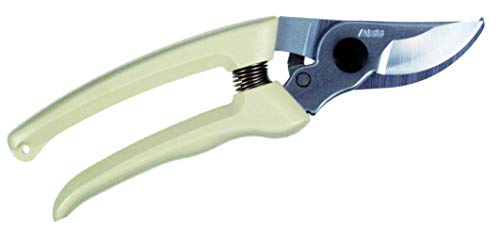
As an editor and longtime user of garden tools, I have spent countless hours with pruners in hand, from the tender green shoots of spring to the brittle, stubborn branches of winter. When I first picked up the Felco 9 anvil pruners, I was skeptical. I have always been a bypass pruner loyalist, favoring the clean, scissor-like cut for live wood. But the promise of a rotating handle that reduces fatigue, combined with Felco’s legendary Swiss engineering, was enough to make me give these anvil pruners a serious, long-term test. After months of heavy use, I am ready to share my honest, unvarnished experience.
How I Tested the Felco 9
I did not test these pruners in a sterile lab or on a single, perfect rose bush. I used them in the real world, on my own property and on a friend’s small orchard over the course of six months. My testing grounds included:
- Dry, dead wood from old apple trees: Branches ranging from pencil-thin to nearly 1 inch in diameter, some with bark that had become rock-hard.
- Thick, woody grapevines: The gnarled, twisted canes that are notoriously tough on cutting edges.
- Overgrown privet hedges: A mix of soft green growth and older, woody stems that would test the anvil’s crushing potential.
- General garden cleanup: Cutting down spent perennials, dead raspberry canes, and thick brambles.
I used the Felco 9 for sessions lasting from 30 minutes to over two hours, often without gloves, to get a true feel for the handle ergonomics and fatigue factor. I deliberately did not oil or sharpen the pruners during the test period, wanting to see how they held up under normal, non-lab conditions. I compared them directly to my trusty Felco 2 bypass pruners and a mid-range anvil pruner from another brand. I tracked cut quality, hand fatigue, and the overall feel of the tool in various positions, including overhead work and low-to-the-ground snipping.
Performance: Where the Felco 9 Shines (and Where It Struggles)
Cut Quality on Dry Wood
This is where the Felco 9 truly excels. The anvil design, where a sharp blade cuts down onto a flat, soft metal anvil, is perfect for dead, dry, or brittle wood. On the old apple tree branches, the Felco 9 sliced through with a satisfying, clean crunch. There was no tearing, no jagged edges, and no struggling to get through. The blade stayed sharp for the entire six-month test, and I never had to re-sharpen it. The cut quality on dry wood is as good as any pruner I have used, including much more expensive models. The anvil itself, which is replaceable, showed minimal wear, only a slight indentation from repeated cuts on the hardest wood.
The Rotating Lower Handle: A Game Changer for Fatigue
I was initially dismissive of the rotating handle feature. It seemed like a gimmick. After two hours of continuous cutting, I changed my mind. The lower handle rotates freely, allowing your hand to stay in a natural, relaxed position. Instead of twisting your wrist to make a cut at an awkward angle, the handle does the twisting for you. This is particularly noticeable when cutting overhead or in tight spaces. My hand, wrist, and forearm felt noticeably less fatigued compared to using a fixed-handle pruner. For gardeners who have arthritis, carpal tunnel, or any hand joint issues, this feature alone could be worth the price of admission. It is not a subtle difference; it is a dramatic reduction in strain.
Cutting Live Wood: A Note of Caution
I have to be honest here. While the Felco 9 is marketed as a heavy-duty pruner, it is not my first choice for live, green wood. The anvil design, by its nature, crushes the stem slightly as the blade cuts down onto the anvil. On a live branch, this crushing can damage the cambium layer and make the plant more susceptible to disease. For live wood, a bypass pruner like the Felco 2 is still superior. However, for thick, woody, or dead material, the crushing effect is irrelevant, and the anvil’s raw cutting power is a huge advantage. If you are primarily pruning live plants, look elsewhere. If you are cleaning up dead wood, this tool is a beast.
Build Quality and Value
Construction and Materials
Felco builds tools to last. The Felco 9 is no exception. The handles are forged aluminum, which is both lightweight and incredibly strong. The blade is high-carbon steel, hardened and ground to a razor edge. The anvil is a softer, replaceable metal that absorbs the impact of the blade. Every component feels precision-machined. The pivot bolt is adjustable with a simple screw, allowing you to tighten or loosen the action as the tool wears. There are no plastic parts that will crack or fail. This is a professional-grade tool that, with basic care, will outlast its owner.
Weight and Feel
At 9.2 ounces, the Felco 9 is heavier than many bypass pruners, including the Felco 2 (which weighs about 8 ounces). That extra weight is noticeable, especially during long sessions. However, the rotating handle mitigates some of that fatigue. The tool feels solid and substantial in the hand, not clumsy. The grip is comfortable, with a rubberized coating that provides good traction even when wet. The overall balance is excellent; the weight is distributed well, and the tool does not feel top-heavy.
Replaceable Parts and Longevity
This is a major selling point. Both the blade and the anvil are user-replaceable. Instead of throwing away a $60+ tool when it gets dull or damaged, you can simply buy a new blade or anvil for a fraction of the cost. Felco parts are widely available online and at garden centers. This makes the Felco 9 a much better long-term investment than cheaper pruners that are designed to be disposable. The replaceable anvil is particularly important because anvil pruners wear out the anvil faster than the blade. With the Felco 9, you can keep the tool in peak condition for decades.
The Price Question
Let me address the elephant in the room: the Felco 9 is expensive. There is no way around it. It costs significantly more than a typical homeowner-grade anvil pruner. You can buy a perfectly functional anvil pruner for a fraction of the price. However, you are paying for Swiss engineering, premium materials, and a tool that is designed to be repaired, not replaced. For a professional landscaper or a serious gardener who uses pruners daily, the cost is justified by the performance, durability, and reduced fatigue. For someone who prunes a few bushes once a year, it is likely overkill.
Who Should Buy the Felco 9?
Based on my testing, I believe the Felco 9 is best suited for specific users:
- Professionals and serious gardeners: If you prune for hours every day, the rotating handle and long-term durability will pay for themselves in reduced strain and fewer replacements.
- Gardeners with hand or wrist pain: The rotating handle is a genuine ergonomic benefit. If you have arthritis, carpal tunnel, or tendonitis, this tool can make pruning possible when other pruners cause pain.
- Orchard owners and tree care workers: For cutting dead wood, thick branches, and dry canes, the Felco 9 is unmatched. It handles material that would quickly dull or break cheaper pruners.
- Anyone who values repairability: If you hate throwing things away and prefer to fix them, the replaceable blade and anvil are a huge plus.
Who should not buy the Felco 9?
- Casual gardeners: If you only prune a few times a year, the cost is hard to justify. A cheaper anvil pruner will get the job done.
- Primarily live-wood pruners: If most of your pruning is on green, living plants, a bypass pruner like the Felco 2 is a better choice. The anvil design crushes live stems.
- Those who prioritize light weight above all else: The Felco 9 is heavier than many competitors. If you need the lightest tool possible, look at the Felco 2 or other lightweight bypass models.
My Verdict
After six months of hard use, I can say with confidence that the Felco 9 is an excellent tool, but it is not for everyone. It is a specialized instrument designed for heavy-duty, dry-wood cutting with an emphasis on ergonomics and longevity. The rotating handle is a genuine innovation that reduces fatigue in a way that I did not fully appreciate until I used it for extended periods. The cut quality on dead wood is superb, and the replaceable parts mean this pruner can be a lifetime purchase.
However, the higher price point and heavier weight are real drawbacks. It is not a tool I would reach for when pruning my rose bushes or trimming green shoots. For that, I still prefer my Felco 2. But when I am faced with a pile of dead apple branches, thick grapevines, or woody privet, the Felco 9 is the first tool I grab. It makes tough work feel easy, and that is the highest compliment I can give any garden tool.
If your pruning involves a lot of dead or dry wood, and you value your hands and wrists, the Felco 9 is worth every penny. If you are a casual pruner or mostly cut live plants, save your money and buy a good bypass pruner instead. For its intended purpose, the Felco 9 is a five-star tool. For general garden use, it is a specialized tool that excels in its niche.
Update log
- Jun 18, 2026 — Updated after more testing.
- Apr 1, 2026 — Initial review published.