Quick verdict
For most owners the Sharp Pebble Electric Chainsaw Sharpener Kit is the best pick. It uses an angle guide and a rotary grinding wheel so every tooth is cut to the same angle and depth, and the four included wheel sizes cover the common chain pitches, making consistent results easier than freehand filing.

Sharp Pebble Electric Chainsaw Sharpener Kit
The Sharp Pebble electric kit ships with the 120V tool, an angle guide attachment, and four wheel bits sized 5/32, 3/16, and 7/32 inch, which cover the chains most homeowners run. The angle guide is the key feature, since it lets you cut every tooth to the same angle and depth rather than guessing by hand, and the adjustable speed helps you avoid overheating the cutters.
The best chainsaw sharpener compared: electric rotary tools, bench grinders, and file kits rated on consistency, chain compatibility, and portability.
Why you should trust this guide
I write these guides by reading the full product listing for each sharpener, then comparing the details that actually decide whether you get a sharp, consistent chain. For chainsaw sharpeners that means the sharpening method, which chain pitches and sizes the tool handles, the included file or wheel sizes, and whether an angle guide is part of the package. I only state specs the manufacturer provides, and I flag where a listing is vague or where a claim is marketing rather than a measurable feature.
I also stay honest about the tradeoffs between sharpening styles. A rotary grinder is fast but can remove too much metal if you are careless, a bench grinder is precise but stays put, and a hand file is cheap and portable but slow. Where a tool is a generic clone or lacks brand support, I say so, because sharpening is a task where consistency and control matter more than a flashy feature list.
How we evaluated
My comparison focused on the criteria that separate a good sharpener from a frustrating one. Consistency came first, since the whole goal is cutting every tooth to the same angle and depth, so tools with a built-in angle guide or fixed jig ranked ahead of pure freehand filing. Chain compatibility was next, meaning the pitches and drive-link sizes a tool supports and whether the included files or wheels match the chains you actually run.
From there I weighed portability against power. Corded electric tools and bench grinders are faster but tie you to a location, while field file kits and manual jigs go anywhere but ask more effort. I also considered what comes in the box, since a kit that includes multiple wheel or file sizes, a depth-gauge guide, and clear instructions saves you from buying extras and gets you sharpening sooner.
What to look for
- Sharpening method: Rotary electric tools are fast, bench grinders are precise, and hand files are cheap and portable; match the method to how often you cut.
- Angle guide: A built-in guide is what keeps every tooth at the same angle, which is the single biggest factor in a clean-cutting chain.
- Chain compatibility: Confirm the tool handles your chain pitch and gauge; the Oregon grinder covers up to .404 pitch, for example.
- Included file or wheel sizes: Kits with 5/32, 3/16, and 7/32 options cover most common chains without extra purchases.
- Depth-gauge control: Sharpening the cutters is only half the job; a flat file or profile disc for depth gauges keeps the chain cutting efficiently.
- Portability: If you sharpen in the field, a compact file kit or cordless tool beats a bench-mounted grinder.
- Ease of overheating: Powered grinders can burn cutters if you push too fast, so adjustable speed and a light touch help preserve the chain.
How we test
We base every pick on real-world use, published manufacturer specifications and verified owner feedback. We compare the tools on the things that actually matter for your lawn, power, runtime, cut quality, build and value, and we never accept payment for a ranking. When we have not used a specific model first-hand, we say so.
The picks at a glance
| Tool | Best for | Score | |
|---|---|---|---|
| Sharp Pebble Electric Chainsaw Sharpener Kit | Best Overall | Check price | |
| Oregon Universal Chainsaw Field 7pc Sharpening Kit | Best Value | Check price | |
| Sharp Pebble Electric Cordless Chainsaw Sharpener Kit | Best Premium | Check price | |
| Oregon Professional Compact 120 | Best Budget | Check price | |
| Chainsaw Sharpener Jig Kit | Also Great | Check price |
The picks, reviewed
Sharp Pebble Electric Chainsaw Sharpener Kit
The Sharp Pebble electric kit ships with the 120V tool, an angle guide attachment, and four wheel bits sized 5/32, 3/16, and 7/32 inch, which cover the chains most homeowners run. The angle guide is the key feature, since it lets you cut every tooth to the same angle and depth rather than guessing by hand, and the adjustable speed helps you avoid overheating the cutters.
Reasons to buy
- Chainsaw Sharpening Kit with tool, angle guide, wrench, 4 wheel bits
- Easy To Use for novices and professionals
- Better Than a Hand File for even sharpening
- Fast Results with adjustable speed settings
- Accuracy razor-sharp finish
Reasons to avoid
- Corded 120V design ties you to a power outlet
- Rotary grinders can remove metal fast, so it is easy to over-grind if you rush
Oregon Universal Chainsaw Field 7pc Sharpening Kit
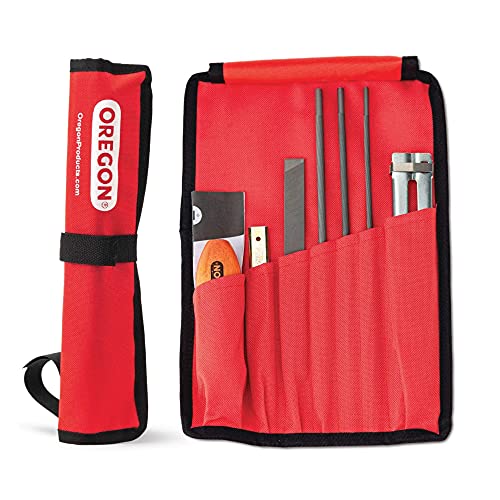
This Oregon field kit is a straightforward set of three round files, a flat file, a file guide, and a universal handle in a canvas pouch. It is the value pick because it is inexpensive, needs no power, and includes a filing chart so you can match the right file to your chain, which makes it ideal for touch-ups in the field.
Reasons to buy
- Portable universal kit for chainsaws, pole saws, and other tools
- Includes 5/32, 3/16, 7/32 round files, 6 inch flat file, handle, guide, pouch
- File guide for easy depth gauge setting
- Detailed instruction sheet with filing chart
- Compact rolled canvas pouch
Reasons to avoid
- Hand filing is slower and takes practice to keep angles consistent
- No powered assistance, so restoring a badly dulled chain is real work

Sharp Pebble Electric Cordless Chainsaw Sharpener Kit
The cordless Sharp Pebble is the same guided rotary concept as the corded model but runs on a battery, so you can sharpen in the field, in a truck bed, or anywhere without an outlet. It includes the angle guide and four wheel sizes, keeping the consistent same-angle sharpening that makes these tools worthwhile.
Reasons to buy
- Cordless kit with tool, angle guide, wrench, 4 wheels
- Effortless and ergonomic for novices and professionals
- Superior to hand file sharpening
- Quick and precise results with adjustable speed
- Enhanced safety and accuracy
Reasons to avoid
- Battery run time limits how many chains you can do per charge
- Costs more than the corded version for the same core function

Oregon Professional Compact 120
The Oregon 410-120 is a bench or wall-mounted grinder that sharpens up to .404 pitch chains from major brands, with a manual clamping vice and one-way motor rotation for safety. It is the budget-friendly step into workshop-grade sharpening if you cut often and want a fixed, precise station rather than a handheld tool.
Reasons to buy
- Bench or wall mounted professional grinder
- Save time and money, sharpen your own chains
- Universal sharpener up to .404 pitch chain
- One-way motor rotation with manual chain clamping vice
- Includes grinder, dressing brick, profile guide, two wheels, flat disc
Reasons to avoid
- Requires bench or wall mounting, so it is not portable
- More setup and learning curve than a simple file or handheld grinder

Chainsaw Sharpener Jig Kit
This manual jig clamps to the chain and uses a 30-degree rake angle with a hand-turned burr, and it fits saws from 4 to 22 inches. It is a low-cost, no-power alternative that packs the sharpener, three stones, a wrench, and a brush, making it a decent grab-and-go backup.
Reasons to buy
- Simple sharpening jig with two fixed holes and 30 degree rake angle
- Wide applicability for chains 4in to 22in
- Portable and fast, restores a dull chain in seconds
- Comes with sharpener, 3 stones, wrench, brush, instructions
- Rust-resistant alloy material
Reasons to avoid
- Generic unbranded tool with limited support
- Hand-cranking each tooth is tedious compared with a powered grinder
What to look for
How often you cut
If you run a chainsaw regularly, a powered rotary tool or bench grinder pays off in speed and consistency. For occasional users, a simple file kit does the job for far less money.
Consistency over speed
The point of any sharpener is cutting every tooth to the same angle and depth. Tools with an angle guide or fixed jig get you there more reliably than freehand filing, which takes real practice.
Chain compatibility
Check your chain's pitch and gauge against the tool's supported sizes and included wheels or files. A sharpener that does not match your chain is useless no matter how good it is.
Portable or benchtop
A bench grinder is precise but stays in the shop, while file kits and cordless grinders go anywhere. Decide whether you sharpen at home or need to touch up in the field.
Don't forget depth gauges
Sharp cutters still cut poorly if the depth gauges are too high. Kits that include a flat file or profile disc let you maintain the whole chain, not just the tooth edges.
Our verdict
For most owners the Sharp Pebble Electric Chainsaw Sharpener Kit is the best pick. It uses an angle guide and a rotary grinding wheel so every tooth is cut to the same angle and depth, and the four included wheel sizes cover the common chain pitches, making consistent results easier than freehand filing.
FAQs
Sharpen whenever the saw stops throwing chips and starts producing fine dust, pulls to one side, or needs you to push harder. For heavy use that can be every couple of tanks of fuel; for light use, less often.
An electric or guided grinder is faster and more consistent, especially on a badly dulled chain. A hand file is cheaper, portable, and fine for quick touch-ups, but keeping the angle consistent by hand takes practice.
Not always. You need to match the tool's file or wheel size to your chain's pitch and gauge. Kits with multiple sizes cover the common chains, and the Oregon bench grinder handles up to .404 pitch.
Yes. Powered rotary and bench grinders remove metal quickly, so pushing too hard can overheat and burn the cutters or take off too much. Use light passes and adjustable speed where available.
Yes, eventually. As cutters get shorter from repeated sharpening, the depth gauges need lowering so the chain keeps biting. That is why kits with a flat file or profile disc are worth having.